what does the acronym vital mean in regards to wwii?
OSS Records
- About the Records
- Provenance of the Records
- Finding Aids
- For More than Data About the Records
About the Records
Earlier World State of war II, intelligence activities in the United States were mostly carried out by the Department of State, the Part of Naval Intelligence (ONI), and the State of war Department's Military Intelligence Division (MID). Hoping for greater coordination of intelligence activities, as well as a more than strategic approach to intelligence gathering and operations; on July 11, 1941, President Franklin Roosevelt appointed William J. Donovan to head a new civilian office attached to the White House, the Coordinator of Information (COI). The COI was charged with collecting and analyzing information which may have had bearing upon national security, correlating such data and data, and making this information available to the President, authorized departments, and authorized officials of the regime. The COI operations duplicated, but did not necessarily replace, functions carried out past the State Department, ONI, and MID.
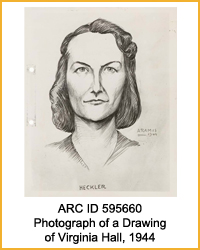
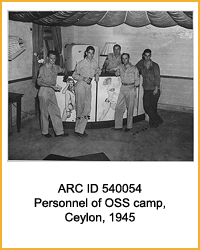
After the start of Earth War Ii, Donovan worked with the newly created Joint Chiefs of Staff (JCS) to place the COI under JCS control; while preserving COI autonomy, and gaining access to military support and resources. On June 13, 1942, the COI became the Role of Strategic Services (OSS). The OSS gathered intelligence information most practically every state in being, but was not allowed to conduct operations in the Pacific Theater, which General Douglas MacArthur claimed as his own. J. Edgar Hoover of the Federal Agency of Investigation (FBI) and Nelson Rockefeller, the Coordinator of Inter-American Diplomacy, insisted that the OSS should non operate in the Western hemisphere. For these reasons, the records of OSS covert operations are almost entirely confined to Europe, Asia, and North Africa. The OSS established more than 40 overseas offices during World State of war II, extending from Casablanca to Shanghai, and from Stockholm to Pretoria.
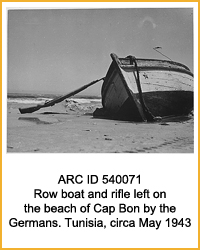
Afterwards the OSS was terminated on September xx, 1945, by Executive Society; almost records were eventually transferred to two agencies of the Federal government. Approximately 1,700 cubic anxiety of Enquiry and Analysis Branch records ended upward at the Section of Land, while more than 6,000 cubic feet of operational records were transferred to what was to become the Central Intelligence Agency (CIA). Note that the CIA was not created until July 26, 1947.
After Earth War II, a group of OSS veterans in the Strategic Services Unit (SSU) arranged most OSS operational records according to OSS locations, offices, and file categories. For a list of these categories, see the Arrangement of OSS Records.
Provenance of the Records
In 1946, the Land Department, which had taken over the bulk of Inquiry and Analysis Branch files afterward the war, began releasing records to the National Archives. The largest series consists of intelligence reports relating to political, economic, military machine, and morale information about almost every nation on the earth. Each serial is arranged by certificate number. Reports and correspondence sent to the R&A Branch would be assigned the next sequent number. The records are accessible only though a card alphabetize adult by the Key Information Division library.
Finding Aids
In 1947, the CIA causeless custody of OSS operational records that had been arranged by the SSU. After years of use at the CIA, the SSU's original organisation of arrangement was largely lost, the various series often condign mixed due to frequent relocation and re-shelving. In 1980, the CIA began transferring OSS records to the National Archives. Records were first reviewed for declassification by the CIA, with sensitive documents withdrawn before transfer. The transfer, processing, and creation of finding aids followed at the National Archives and records were made available to the public. There are binder lists available in paper format in the enquiry room for most of the records accessioned from the CIA's OSS archives. We likewise have the post-obit RG 226 finding aids available in the enquiry room:
- Betoken of Origin: too displays branch, record blazon, and associated location (where included)
- Branch: also displays record type, point of origin, and associated location
- Associated Location: also displays point of origin, branch, and record type
- Area: likewise displays indicate of origin, co-operative, tape type, and associated location
- Code/Projection Proper name: besides displays point of origin, co-operative, record type, and personal name (where included)
- Personal Proper name: also displays point of origin, branch, and record type
- Notes: as well displays bespeak of origin, branch, and tape blazon
- Record Blazon: as well displays betoken of origin, branch, and associated location
- Entry: also displays box and folder number, point of origin, area, associated location, code/project name, and personal proper noun
These finding aids are useful, since RG 226 operational files are non arranged in conventional series or entries. A typical RG 226 series of OSS operational records may contain files from a number of different branches and offices. These offices and branches accept been listed in scope and content notes of series descriptions. Using the finding aids listed higher up should aid researchers in identifying specific series, boxes, and folders for research. Taking another step and using existing folder lists should further help researchers in identifying potentially useful material. For more data about the finding aids, please contact National Archives staff at archives2reference@nara.gov
For More than Information About the Records
For a more detailed description of the records, run across:
- Federal Records Guide for the Part of Strategic Services
- OSS Glossary of Initialisms, Abbreviations, and Acronyms
- Microfilm Publications and Related Records
- System of OSS Records
- OSS Personnel Files
- OSS Series List
To learn more well-nigh the Office of Strategic Services Records: See the Timeline, Organizational Chart, or Selected Images and Maps.
Source: https://www.archives.gov/research/military/ww2/oss
0 Response to "what does the acronym vital mean in regards to wwii?"
Post a Comment